



What is the only thing that can be corrected despite being error-free? Obviously, coffee! This drink, which we now take for granted, was not always so and there was even a time when people were unaware of its existence.
We bet that, at least once in your life, you too will have wondered who invented coffee. After all, we all get those mornings when we can’t get out of bed at all, if not thanks to this irreplaceable drink. In those moments, therefore, it is perfectly legitimate to ask ourselves who we have to thank for having given it to us.
Well, the purpose of this article is precisely to satisfy your curiosity, revealing all the secrets and background behind our beloved coffee!
What are the real origins of coffee?

The origins of coffee date back to the distant past, roughly between the 9th and 10th centuries. Legend has it that it was discovered by a shepherd named Kaldì, who lived on the Ethiopian highland of Caffa (from which the name ‘coffee’ derives).
Apparently, the sheep he was leading to pasture fed on some of the beans, getting a great excitement from them in return. This unusual reaction did not go unnoticed in the eyes of the shepherd, who decided to sample some beans himself, discovering for the first time ever the energising effects of caffeine.
According to another version of the legend, however, it was the Ethiopian ancestors of the Oromo group who discovered coffee and its benefits. Also, shepherds, they used to create energy ‘snacks’ by mixing coffee fruits with fat, to be consumed during the long hours of herding.
A third and even more suggestive legend has it that coffee was a gift from heaven sent by the archangel Gabriel to Muhammad in order to give him strength and vigour during a night battle against the infidels. It is said that thanks to this ‘miraculous gift’, the prophet was not only able to unseat no less than forty knights, but even to satisfy as many virgins.
Minor licentiousness aside, this was only the beginning. Once discovered, coffee was an almost immediate success, triggering a veritable ‘mission of expansion’ that involved the whole world.
Types of coffee
While legends tell us about the discovery of coffee, botany reveals interesting details about the plant itself. Coffee is a tropical plant that can grow up to 10 metres in height, but is generally cultivated at around 2 metres to facilitate the harvesting of the fruit.
There are many species of plants in the genus Coffea, but only two are of significant economic importance for the production of the coffee we drink every day:
- Coffea arabica, commonly known as Arabica;
- Coffea canephore, better known as Robusta.
Each of these species has unique characteristics that influence the taste and quality of the coffee produced.
Arabica: the king of coffees
Arabica is considered the most valuable variety and accounts for about three quarters of the world’s coffee production. Here are some of its distinctive characteristics:
- It produces a very good quality, aromatic coffee with a less bitter and more persistent flavour;
- It has a relatively low caffeine content of between 0.9% and 1.7%;
- It is sensitive to heat and humidity, thriving at altitudes above 900 metres;
- The quality of the coffee improves as the altitude of cultivation increases.
Robusta: the resilient coffee
Robusta, which constitutes the remaining quarter of world production, has very different characteristics:
- It produces a very full-bodied coffee with a distinctly more bitter taste;
- It has a higher caffeine content, ranging from 1.6% to 2.8%;
- It grows at lower altitudes, between 200 and 300 metres above sea level;
- It is more resistant to disease and adapts better to unfavourable climatic conditions.
The choice between Arabica and Robusta, or a mix of the two, greatly influences the taste profile of the coffee we drink.
How did coffee spread?
From the 10th – 11th century, coffee began to spread to the Arabian Peninsula, i.e. present-day Yemen, thanks to imports by Arab merchants. From there it continued its course towards the Middle East and Constantinople: two territories that were somewhat the focus of its spread, as it was in these areas that Europeans first came into contact with what was to be their drink of the future.
Starting in the Middle Ages, in fact, the coffee plant was exported from Yemen to the city of Moca or Mokhā, from which the current name of Moka is derived. As for the very first ‘local’ records, they date back to the 1670s, thus coinciding with the trade of Venetian merchants.
But if you think that the history of coffee is studded with successes and that its spread never encountered any obstacles, we must unfortunately disappoint you. Our favourite drink, in fact, has not always had an easy life, to the point of even being banned by several religions!
Coffee was criticised by the Church
Since time immemorial, our Church has never looked favourably on anything that could distract and cheer up believers. When it first came into contact with coffee, consequently, its reaction was not at all positive. Indeed, the high prelates showed a certain fear towards that black drink with such stimulating effects.
Considering it a real temptation of the devil, the Church in fact tried to prohibit the consumption of coffee. That is, at least, until Pope Clement VII tasted a cup and was literally won over by it: to such an extent that coffee officially went from being a ‘devilish drink’ to a ‘Christian drink’.
If episodes of this kind can make you smile, bear in mind that it was by no means an isolated case. Coffee suffered a similar fate in Islamic territory, where it was officially banned in 1511, again because of its stimulating effect. Its saviour, in this case, was Sultan Suleiman I the Magnificent, who authorised its consumption again from 1524.
Coffee houses and cafés
At this point, the history of coffee moves to Italy: the country that, before all others, had the merit of introducing the very first coffee houses. It was in fact in Venice that public places were founded where people gathered to consume the exquisite black drink, and it was also in this city that what is still considered the oldest coffee shop in the world was founded: the renowned Caffè Florian, active since as far back as 1720.
From Venice, coffee houses and cafés began to spread to the rest of Italy. The best known are Caffè San Carlo in Turin, Caffè Greco in Rome and Caffè Pedrocchi in Padova, which continue to operate to this day. But the true primacy, within the Italian history of coffee, was achieved in the 20th century: a century that marked the birth of the much-loved espresso coffee, a 100% Italian pride. And, as they say, the rest is history.
Around the world in a cup: a journey through coffee traditions
Coffee is a true cultural phenomenon that has conquered the entire world. Each country has developed its own unique traditions related to this precious beverage, turning it into an experience that goes far beyond the simple act of drinking. Let’s take a virtual journey through some of the most fascinating coffee-related rituals in different cultures.
In Ethiopia, the cradle of coffee, the Buna ceremony is a real social ritual. The beans are freshly roasted, ground and prepared in a special container called a ‘jebena’, creating an atmosphere of sharing and conviviality.
Moving on to Turkey, we encounter the famous Turkish coffee, known for its unique preparation. Finely ground beans are simmered with sugar and cardamom in a pot called a ‘cezve’, resulting in a thick and aromatic drink.
Morocco offers us Nous Nous, a delicious mix of strong espresso and foamed milk, served in small glasses with a touch of sweetness.
Italy, the home of espresso, has elevated this drink to a true art. Here, coffee is a moment of social pause, to be enjoyed at the bar, far from the hustle and bustle of ‘coffee to go’.
In Greece, the frappe has become a symbol of post-war coffee culture. This refreshing drink made of instant coffee, ice and milk is perfect for hot Mediterranean afternoons.
Japan fuses tradition and modernity in its coffee culture. The syphon method, spectacular in its preparation, complements the latest third-wave coffee trends with a focus on quality beans and artisanal preparation methods.
Latin America is a kaleidoscope of coffee traditions. In Mexico, Café de Olla smells of cinnamon and spices. Cuba offers its espresso with a sugary cream, while in Colombia, Café con leche is a timeless classic. Argentina surprises with the delicate Café Lagrima, perfect for those who prefer lighter notes.
Finally, in Brazil, one of the world’s largest producers, the ‘cafezinho’ is much more than a cup of strong coffee: it is a symbol of hospitality and a central element of social life.
These different traditions show us how coffee, while being a universal beverage, knows how to adapt and transform, reflecting the richness and diversity of the cultures that have adopted it.
Each sip tells a story, a ritual, a piece of the world.
Conclusion
Would you ever have guessed that behind your must-have morning espresso, which you practically take for granted, lies a world full of history and legend? We, who know about coffee, are the first to be amazed! On the other hand, such a delicious drink could only be the result of an equally fascinating story that, between myth and legend, has survived to this day.
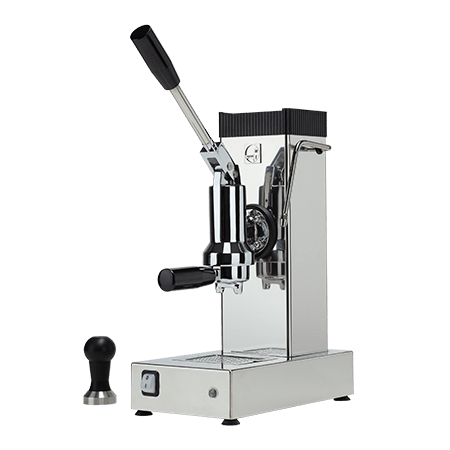
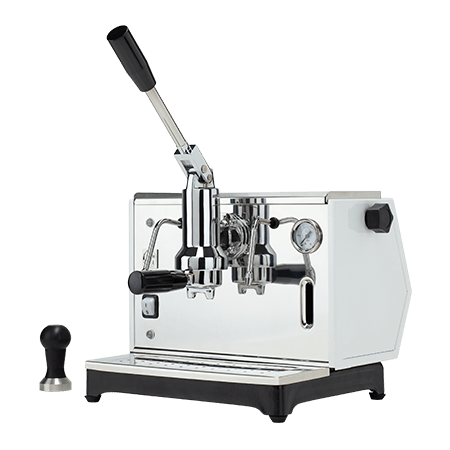
Did you know that along with the espresso, the first coffee machines were also born? One of the first models, for example, was called the Victoria Arduino. Over time, more and more sophisticated machines were designed, right up to today’s lever machines: real jewels capable of ensuring a full-flavoured coffee, rich in all its nutritional properties.
After all, it is no secret that if you want to drink good coffee, you have to do it with the right machine. That is why we at Pontevecchio have decided to specialise precisely in lever machines, offering you the possibility of choosing your favourite from our rich catalogue. So do not hesitate any longer and discover the right coffee machine for you, enjoying the privilege of sipping your favourite beverage as often as you feel the need.