


The first cup of coffee is a bit like the first kiss: you never forget it! That’s why it should always be a special moment that, over time, will become a beautiful memory. On that note, do you remember how old you were when you drank your first coffee?
Knowing the answer to this question will help you understand whether you drank at the right time or you drank it too early: this is not a question to be underestimated, as it is very important to know at what age you can start drinking coffee.
As coffee connoisseurs, we wanted to answer this question by revealing the best age to start drinking Italy’s favourite drink.
Can children drink coffee?
Many parents wonder whether it is right to allow their children to have a cup of coffee, perhaps on special occasions. On the other hand, since it is a drink that adults consume all the time, the little ones at home cannot help but be fascinated by it, wanting to taste it too. But is it a desire that is right to indulge?
The answer is: it depends on how old they are. The problem, in fact, is not so much the coffee itself, but rather the caffeine it contains. Taken by adults, in fact, this substance is able to bring numerous benefits (as long as, of course, you don’t exaggerate with the quantities!), but in the case of little ones the question changes.
The organism of children under the age of 6 may react very differently, as caffeine would have a negative impact on the nervous and cardiac systems.
All this is because, quite simply, young children have not yet developed the necessary capacity to absorb caffeine, which, consequently, they should consume in minute quantities (or not at all).
Be careful, though! We have spoken generically about ‘caffeine’, not coffee. This substance is in fact contained in various foods and drinks.
The effects of caffeine on children
When it comes to children and caffeine, it is important to understand the effects that this substance may have on their body. Let’s see in detail why caffeine should not be consumed by little children.
Insomnia and restlessness: Caffeine is a stimulant and may interfere with normal sleep patterns, causing insomnia or difficulty sleeping. In children, who need deep, restorative sleep to grow, coffee consumption may compromise their nighttime sleep.
Increased cardiac activity: Caffeine stimulates the heart and increases heart rate. In children, excessive caffeine consumption may cause palpitations or a rapid heartbeat, stressing their still-developing cardiovascular system.
Gastrointestinal problems: Caffeine stimulates the production of stomach acid. In children, this can lead to heartburn, acidity or gastrointestinal disorders. Since their digestive system is more delicate, caffeine can easily irritate the stomach.
Anxiety and nervousness: As caffeine is a stimulant, it can cause nervousness, anxiety and agitation. Children are particularly sensitive to these effects and may become more irritable or difficult to manage.
And what about growth? Experts say that there is no correlation between caffeine consumption and growth delays, so it’s a false myth!
At what age can you drink coffee?
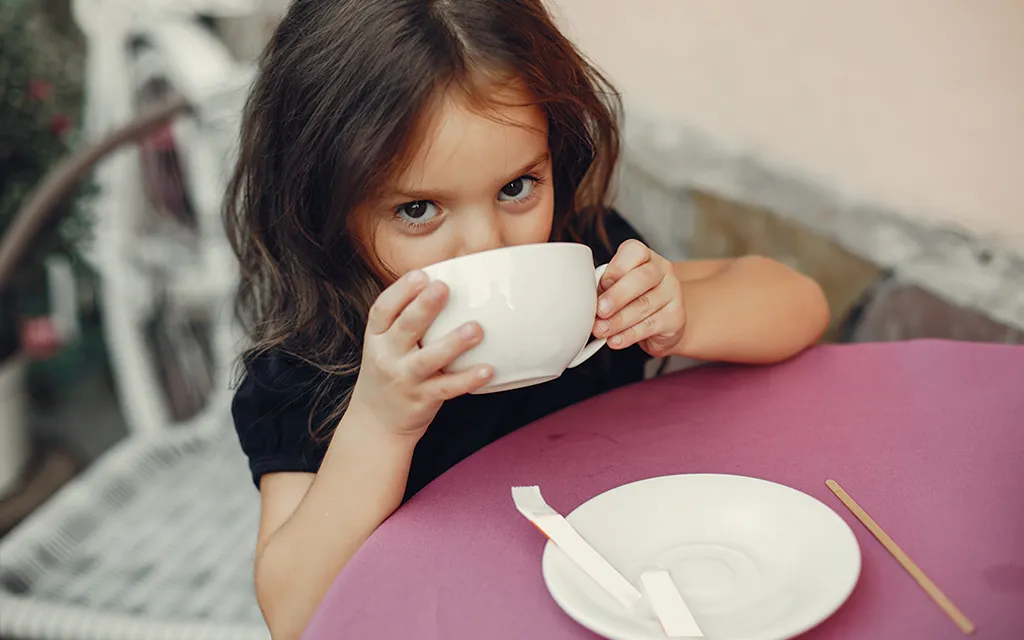
Now let’s move on to the thorny question: at what age can you start drinking coffee? Well, after the age of 6, it is possible to let children taste this ‘mysterious’ drink reserved for adults, perhaps starting with a few drops. Given the peculiar aroma of coffee, which is ill-suited to the delicate palate of small children, it could even happen that the children themselves reject it, not liking its taste at all.
If this is not the case, or if they even like it, it is still advisable to wait until at least the age of 12: an age when children’s bodies harden and begin to tolerate caffeine. The ideal would be to prepare them by starting with some latte macchiato: by doing so, the body would gradually get used to the effects of caffeine, without risking any side effects.
After the age of 12, however, children can officially start drinking coffee, obviously just one cup per day. During this age, in fact, their bodies begin to develop the necessary ability to synthesise caffeine.
This ability can also be ‘trained’ with cappuccino: a drink that combines the beneficial properties of this substance with those of milk, which makes it perfect for pre-teens.
Finally, it should also be noted that sensitivity to coffee varies from person to person, so it is important to observe each individual’s reaction to the substance.
What alternatives are there for children?
If cappuccino is an excellent solution for 12-year-olds, it is not so for younger children. As you should have realised by now, the problem is caffeine, which is widely present in cappuccino. One of the most common mistakes one can make in this regard is to offer children a cup of decaffeinated coffee, naively thinking that because there is no caffeine in it, then they are not at risk.
The truth, unfortunately, is that decaffeinated coffee undergoes numerous chemical treatments, the purpose of which is precisely to deprive it of caffeine. The result, paradoxically, is to make it more harmful than normal coffee, at least for the organism of children.
It is still possible to give children the chance to indulge themselves by letting them try barley coffee and/or ginseng coffee.
Both are in fact characterised by the fact that they do not contain caffeine, but rather substances that can provide innumerable benefits to the body, especially to that of a young person. Alternatively, tea is also a good solution, provided, of course, that you do not overdo the quantities.
Hidden’ caffeine: the foods and drinks to track
When people think of caffeine, coffee is the first drink that comes to mind. However, this stimulating substance is present in numerous other foods and beverages, many of which are very popular among children and adolescents. Monitoring caffeine intake in these products is crucial to avoid unwanted effects, especially in young children.
For example, chocolate contains an amount of caffeine that, although less than coffee, can add up quickly if consumed in large quantities. Carbonated drinks, such as coca cola, and energy drinks also contain significant levels of caffeine, often overlooked by parents.
Energy drinks, in particular, can contain as much or even more caffeine than a cup of coffee, which makes them dangerous for children and adolescents, especially if consumed frequently.
It is important to read product labels carefully to be aware of how much caffeine you are introducing into the diet of young people. Moreover, even tea, a drink commonly considered healthy, contains a moderate amount of caffeine that may accumulate over time, especially when combined with other sources.
Educating children and adolescents to recognise these ‘hidden’ sources of caffeine can help them maintain a balanced consumption, avoiding exceeding the recommended doses for their age and ensuring healthy growth.
Conclusion
Now that we have explored the question of the right age to drink coffee together, you are probably thinking about when you enjoyed your first cup. If you drank it before the recommended age, don’t worry: information on how much and when to consume caffeine are not always easy to find.
Anyways, it is important to be aware that, although coffee offers numerous benefits, it is always best not to overdo it and choose good quality products in order to preserve its nutritional properties.
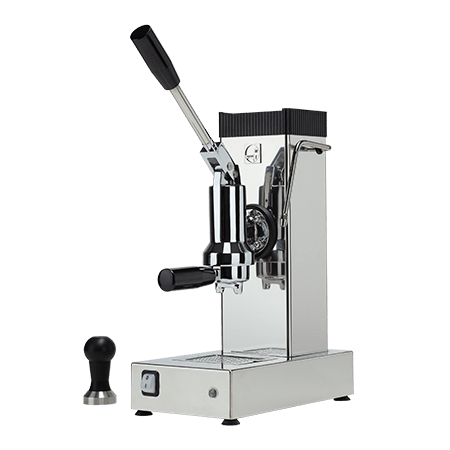
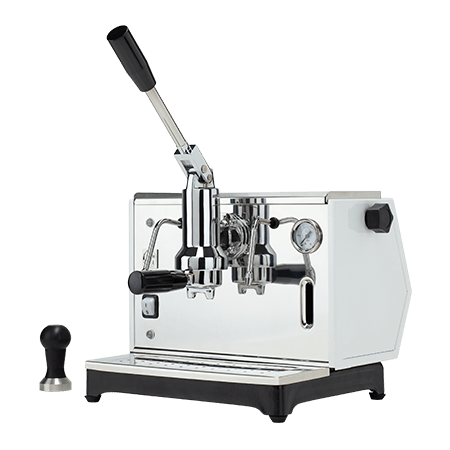
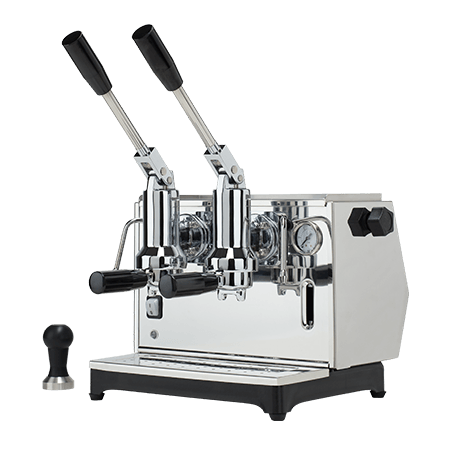
Surely you too would agree that if you want to drink good coffee, you should do it with the right machine. That is why we at Pontevecchio offer you our lever machines, which will not only guarantee you an exquisite coffee, but will also preserve all its nutritional properties.
So, now that you are finally old enough to treat yourself to a healthy dose of caffeine, all you have to do is take advantage of it: browse our catalogue and discover the right coffee machine for you!